


China Allows Alibaba, ByteDance to Buy H200: Why Did Nvidia Only Rise 1%? What Conditions Are Needed for the Stock to Double Again?
2026年7月9日How AI and Intelligent Robots Will Reshape Employment and Wealth Patterns in the Next Decade: A Full Analysis of Affected Asset Classes
⚠️ Disclaimer: This article is for informational purposes only and does not constitute investment advice or financial guidance. All analysis and opinions are the author’s personal views and do not represent any institutional position. Investing involves risk; readers should assess risks independently and consult professionals when necessary.
Global tech giants are, at an unprecedented pace, forcibly shifting their core assets from “people (engineers and intellectual capital)” to “silicon (GPU computing power assets).” This asset paradigm shift is systematically compressing profit margins and cash flows across nearly all industries through two waves: the first wave is generative AI, already underway; the second wave is embodied intelligence (humanoid robots), set to follow within 3 to 10 years. Understanding the transmission mechanism of these two waves is the core prerequisite for current asset allocation decisions.
Asset Paradigm Shift: From Human Capital to Computing Power Assets
In the PC era, mobile internet era, and traditional cloud computing era, the business logic of tech companies was: a large number of top engineers (people) → develop disruptive software → generate high margins with near-zero marginal cost. People were the core fixed assets, and recruiting top engineers was the essence of the moat.
The AI era has completely broken this formula. The core competitiveness of large models has become the absolute scale of physical computing power. Without hundreds of thousands or even millions of top-tier GPUs, even the best engineering team cannot train cutting-edge models from scratch—while companies with top computing power can use a few people to harness AI to complete work that previously required hundreds.
This forces corporate cash flows to be forcibly diverted from “salary accounts” to precisely transfuse NVIDIA (GPU hardware) and TSMC (physical capacity). Assets shift from employees to chips.
Layoffs and GPU Purchases: Two Sides of the Same Decision
The simultaneous actions of mass layoffs and massive GPU purchases by Microsoft, Meta, ByteDance, Amazon, and others in recent years are mirror images of the same financial decision:
- Layoffs reduce operating expenses (OpEx), immediately improving cash flow and freeing up capital for GPU purchases.
- GPU purchases are recorded as capital expenditures (CapEx), forming fixed assets depreciated over 4–5 years, without directly hurting current net profit.
Executing both actions simultaneously presents an ideal narrative on financial statements: “headcount reduction, stable profits, and AI capability leap.” This is why Wall Street typically does not punish these companies’ stock prices after layoff announcements but instead responds positively.
Data validates this logic: The four major hyperscale cloud providers (Microsoft, Google, Meta, Amazon) are estimated to have combined AI CapEx of approximately $700–725 billion in 2026. Amazon’s trailing twelve-month free cash flow (TTM FCF) thus plummeted from $25.9 billion to about $1.2 billion; Google’s parent company Alphabet urgently issued $31.1 billion in bonds to supplement liquidity; Meta’s stock fell about 7% after hours following its earnings call solely due to raising its CapEx ceiling to $145 billion.
These giants’ single-quarter net profits are already substantial: Microsoft’s Q1 2026 net profit was $31.8 billion, Google about $30 billion, Meta about $26.8 billion, and Amazon about $18 billion. Combined annual net profit approaches $370 billion. Yet even so, annual hardware spending of $700 billion is rapidly draining their free cash flow. Their response is to issue debt—not equity.
Why Issue Debt Instead of Equity
Issuing additional shares would dilute earnings per share (EPS), a red line in the US stock valuation system. The market would interpret it as insufficient core business cash flow, triggering panic selling. These four giants have extremely high credit ratings (Microsoft is AAA, more stable than the US government), very low borrowing rates, tax-deductible interest, and 5- to 30-year long-term bonds spread repayment pressure into the future.
This means: they use tomorrow’s money to buy today’s computing power, betting that AI monetization will cover these debt costs in the future. If AI monetization falls short, debt default risk could trigger a financial “Minsky moment”—asset values collapse, GPU depreciation fails to materialize, and tech stocks cascade downward. This is Wall Street’s most critical tail risk today.
Formation of the AI Tax: A Closed Loop of SME Profit Erosion
Top giants sustain their computing power arms race through debt, but this cost must ultimately be passed on through product pricing. This creates the “AI tax” mechanism faced by small and medium-sized enterprises (SMEs):
- Giants spend hundreds of billions on GPUs and must recover costs by raising API fees and subscription prices.
- SMEs cannot build their own computing power and must subscribe (Microsoft Copilot, OpenAI API, ByteDance Volcano Engine, etc.).
- AI subscription costs rise continuously; SMEs offset costs by using AI to lay off their own employees (customer service, junior designers, legal assistants).
- As everyone does this, products become homogeneous, forcing price wars and reducing overall industry profit margins.
- Lower margins make it even harder to develop in-house capabilities, further locking them into rising subscription channels.
Laid-off workers lack sufficient capital to buy GPUs and build their own large models, so they must seek other jobs. But other companies are also cutting headcount to maintain margins, so available positions are shrinking. This is a self-reinforcing wealth extraction mechanism: the value created by SMEs and ordinary labor is systematically transferred upward as an “AI tax” to the few oligopolists who control computing power.
Different Fates for Three Types of Industries
This shock will not destroy all industries simultaneously. Instead, it creates three distinct fates based on the dividing line of “whether work can be delivered through a screen.”
First Category: Digital White-Collar Industries—First to Feel Pressure
Advertising and marketing, traditional software outsourcing, content creation, junior legal and financial analysis, customer service, game art—any industry where work output can be delivered through a screen is already seeing AI directly replace core tasks. Profit margins in these industries are squeezed from both ends: AI tools dramatically increase production efficiency, intensifying pricing competition, while the cost of subscribing to AI continues to rise.
Second Category: Physical Industries—Relatively Safe in the Short Term
AI cannot fix a leaking toilet through a screen, cannot carry bricks on a construction site, and cannot replace physical nursing in hospitals. When large numbers of digital white-collar workers are laid off, some capital and labor are forced back into the physical world. In these industries, the core asset at this stage is physical labor, not GPUs, so profit margins and cash flows are relatively stable.
But this is only a time lag, not a permanent defense.
Third Category: Computing Power and Energy Infrastructure—Certain Beneficiaries
The massive construction of AI data centers has driven global electricity demand into the fastest growth cycle in history. Energy (nuclear power, grid, energy storage) and data center infrastructure (cooling systems, fiber optics, power equipment) are among the few directions with extremely strong demand certainty in this transformation.
The Intelligent Robot Variable: Countdown to the Moat of Physical Industries
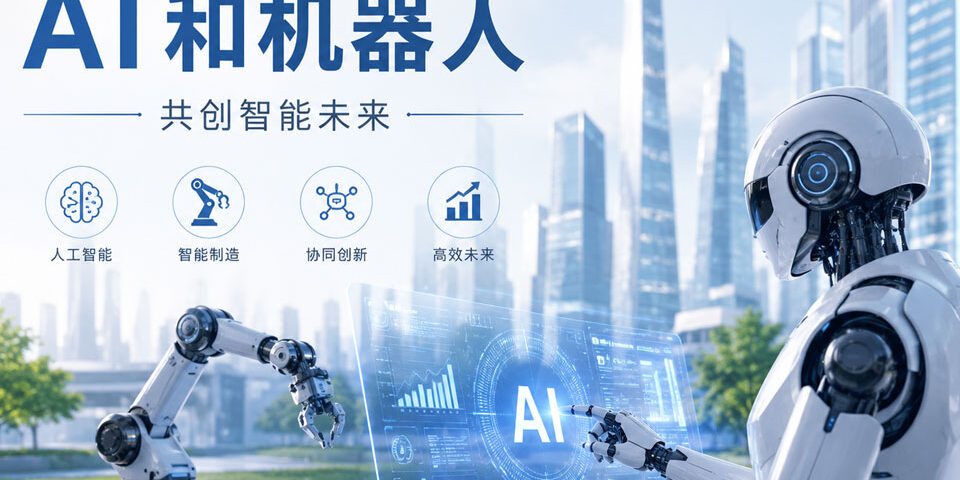
When generative AI (the brain) deeply integrates with humanoid robots (the body), the “physical labor” moat of physical industries will be broken one by one. This is not science fiction but an engineering reality being mass-produced. Humanoid robots like Tesla’s Optimus, Figure, and Boston Dynamics’ Atlas are already being commercially deployed in factories, and mass production costs are rapidly declining.
Key financial inflection point: It is expected that around 2030, the cost of an intelligent robot will drop to $20,000–30,000 per unit—equivalent to about half a year’s salary for an average blue-collar worker. At that point, companies will face the same financial temptation as with GPU purchases: one-time capital expenditure replaces ongoing labor costs, with no social insurance, no leave, no strikes, and 24/7 operation.
| Time Window | Robot Capability Boundary | First Industries Entering Replacement Channel |
|---|---|---|
| 1–2 years (2026–2028) | Highly repetitive, single actions: standard parts handling, battery assembly | Blue-collar temporarily safe; robots still in structured factory environments |
| 3–5 years (2029–2031) | Semi-structured environments: bricklaying, warehouse sorting, standardized commercial kitchens | Basic construction trades, logistics warehousing, chain restaurant kitchens |
| 5–10 years (2031–2036) | Complex unstructured: home repairs, elderly care, general housekeeping | Repair workers, elderly caregivers, domestic service |
The energy industry is no exception: the electricity demand from AI and robot large-scale operations will continue to surge, driving rapid revenue growth for energy companies—but operational tasks such as mine inspections, routine nuclear power plant maintenance, and grid line inspections will also be taken over by radiation-resistant, heat-tolerant robots. Energy companies will have very high revenues but shrinking headcount.
Affected Asset Classes
| Asset Class | Direction | Core Logic |
|---|---|---|
| AI computing hardware (NVIDIA, TSMC, SK Hynix/Micron HBM) | Beneficiary (short to medium term) | Arms race arms dealers; multiple parties competing, supply remains tight |
| Data center cooling and power equipment (Vertiv, etc.) | Beneficiary | GPU operation requires continuous power and cooling infrastructure; demand is rigid |
| Energy and nuclear power/grid construction | Strong beneficiary | AI + robots drive global electricity demand into fastest growth cycle in history |
| Humanoid robot manufacturers (Tesla Optimus, Figure, etc.) | Beneficiary (medium to long term, explosion in 3–5 years) | After mass production cost declines, blue-collar replacement demand will be released |
| Traditional software outsourcing, BPO, digital marketing service providers | Severely pressured | Directly replaced by AI subscriptions; profit margins continuously eroded, no bargaining power |
| Labor-intensive white-collar jobs (junior legal/finance/customer service/design) | Severely pressured | AI automation directly replaces core tasks; positions disappear from organizational structures |
| Construction/logistics/restaurant labor | Stable short term, pressured in 3–5 years | Robot mass production cost declines will trigger structural replacement |
| High-end professional services (top strategic consulting, complex litigation lawyers, top surgeons) | Relatively stable short to medium term | Highly dependent on judgment, interpersonal trust, and unpredictable complex situations |
The Endgame of Wealth Concentration: Who Ultimately Holds Pricing Power
By piecing together the transmission chains of these two waves, the final destination of wealth flow becomes clear:
Global society’s wealth is shifting at the fastest pace in human history from “supporting a large number of human employees” to “feeding a few oligopolists’ silicon-based assets.” Entities that control the following four types of resources will be the net beneficiaries of this transformation:
- Brain (top large models): OpenAI, Anthropic, Google DeepMind, and a few others
- Body (robot production capacity): Tesla Optimus, Figure, Boston Dynamics
- Energy (electricity and storage): Nuclear power operators, large grid companies, energy storage system providers
- Computing power (GPU capacity): NVIDIA + TSMC + three major HBM memory manufacturers
Those outside these four resource categories—traditional enterprises, mid-skilled white-collar workers, blue-collar workers—are on the output side of wealth transfer. The value they create flows upward through two pipelines: “AI subscription tax” and “robot depreciation amortization.” This is the most brutal and clearest distribution logic of this technological revolution.
Conclusion
AI has already significantly compressed profit margins in digital industries and rewritten the competitive structure of jobs; robots will take over within 3 to 10 years, breaking through the physical moats of real-world industries. The time gap between the two waves provides a limited window, but the direction is irreversible. For investors, computing power infrastructure and energy are the most demand-certain beneficiary directions currently; for workers, whether they can enter the “AI orchestration layer”—responsible for defining problems, orchestrating tools, and making judgments—rather than remaining in the execution layer being orchestrated by AI, will be the key dividing line determining their career position over the next decade.
Frequently Asked Questions
Q: Are tech company layoffs and massive GPU purchases the same thing?
A: Yes, they are two sides of the same decision. Layoffs reduce operating expenses (OpEx), immediately freeing up cash flow; GPU purchases are recorded as capital expenditures (CapEx), forming fixed assets depreciated over time without directly hurting current net profit. Executing both actions simultaneously achieves a financial statement effect of “headcount reduction, stable profits, and AI capability leap,” essentially shifting corporate core assets from human capital to computing power assets.
Q: Will SMEs that subscribe to AI eventually find themselves in trouble?
A: Yes. Rising AI subscription costs → layoffs to offset costs → product homogenization → price wars → declining profit margins → greater reliance on subscriptions, forming a closed loop. The majority of value created by SMEs is handed over to computing power giants as an “AI tax,” making them net contributors.
Q: How soon will robots begin to massively replace blue-collar jobs?
A: The key trigger is when the mass production cost of humanoid robots drops to $20,000–30,000 per unit, expected around 2030. Within 3–5 years (2029–2031), basic construction trades, warehousing logistics, and standardized commercial kitchens will be the first to enter the replacement channel; within 5–10 years, complex unstructured work (repairs, caregiving) will face impact.
Q: Which asset directions are most worth watching in this transformation?
A: Beneficiary directions (high certainty): energy and nuclear power/grid construction, data center cooling and power equipment, AI computing hardware supply chain (NVIDIA/TSMC/HBM memory). Medium to long-term beneficiaries: humanoid robot manufacturers. Continuously pressured: traditional software outsourcing, digital marketing service providers, labor-intensive white-collar jobs.
Q: How can ordinary workers find their place in this transformation?
A: The key is whether they can enter the “AI orchestration layer”: responsible for defining problems, selecting and orchestrating AI tools to complete the entire process, and taking responsibility for judgment. These three functions currently cannot be replaced by AI. Workers stuck in the execution layer (writing basic code, creating drafts, organizing data) will face continuous pressure, while those who can complete the entire process from “problem definition to delivery” are the scarcest and most premium resources in today’s job market.
⚠️ Disclaimer: This article is for informational purposes only and does not constitute investment advice or financial guidance. All analysis and opinions are the author’s personal views and do not represent any institutional position. Investing involves risk; readers should assess risks independently and consult professionals when necessary.